

Black Anthurium Plant Care Guide: Tips for Rare Indoor Houseplant. Black Anthurium care with Plant Care Guide. Quick Tips for Rare Indoor Houseplant. Start now
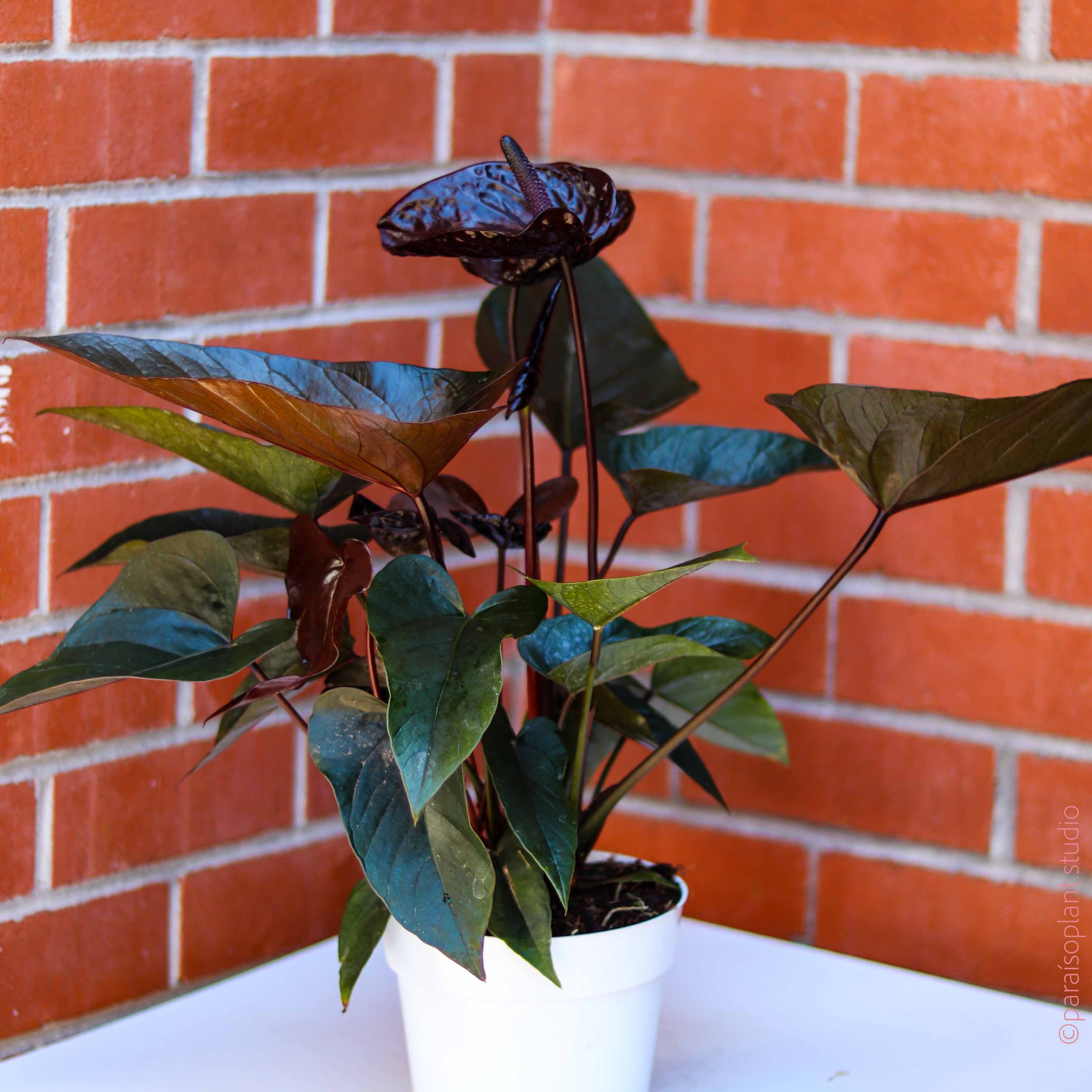
Light Requirements for Black Anthurium Plant Care Guide: Tips for Rare Indoor Houseplant
Providing the correct light ensures vibrant foliage & striking blooms on the Black Anthurium Plant Care Guide: Tips for Rare Indoor Houseplant. Place specimens in bright, indirect light. Direct sun causes scorch marks on the velvety leaves. A north- or east-facing window suits best, offering gentle morning rays. If only a south window is available, use a sheer curtain to filter intense beams. Artificial grow lights work well during shorter winter days. Maintain a 12-hour light cycle to mimic tropical environments. Rotate the pot weekly so all sides receive even illumination, preventing lopsided growth. Observe leaf coloration: deep green signifies optimal exposure, while pale or yellowing foliage indicates excess brightness. Conversely, stretched stems & small leaves signal insufficient light. Adjust placement accordingly. By monitoring & fine-tuning the light conditions, you encourage consistent leaf production & healthy flower spathes. This approach supports a long-lived, thriving specimen in any indoor setting.
| Light Level | Effect on Growth |
|---|---|
| Low (200–400 lux) | Slow, leggy growth |
| Medium (400–800 lux) | Moderate leaf development |
| High Indirect (800–1200 lux) | Best for vivid foliage & blooms |
Watering Techniques in Black Anthurium Plant Care Guide: Tips for Rare Indoor Houseplant
Achieving the ideal moisture balance prevents root rot & wilting in the Black Anthurium Plant Care Guide: Tips for Rare Indoor Houseplant. Water deeply when the top two inches of potting mix feel dry. Use room-temperature, filtered water to avoid chlorine & mineral buildup. Pour until excess drains through bottom holes. Discard leftover water in the saucer after 15 minutes to maintain oxygen around the roots. Frequency varies by season: weekly irrigation in growing months & every 10–14 days in cooler periods. Monitor humidity & pot size; smaller pots & drier air call for more frequent watering. Always check soil moisture before adding more water. A moisture meter or simple finger test works. Keep the substrate evenly moist but never soggy. Good drainage & careful observation prevent fungal problems & promote robust root systems.
-
Use filtered or distilled water to protect sensitive roots
-
Water deeply until drainage holes release excess
-
Allow soil to dry partially between cycles
-
Empty collected water after draining
-
Adjust schedule for humidity & pot size
Soil Composition & Potting Mix for Black Anthurium Plant Care Guide: Tips for Rare Indoor Houseplant
Choosing a well-aerated, loose substrate helps the Black Anthurium Plant Care Guide: Tips for Rare Indoor Houseplant thrive. A mix combining chunky orchid bark, perlite, & peat or coco coir provides excellent drainage & moisture retention. The chunky components prevent compaction & allow air to reach fine roots. Incorporate activated charcoal to remove toxins. Aim for a slightly acidic pH between 5.5 & 6.5 to support nutrient uptake. Refresh the top layer annually to avoid salt buildup. When repotting, select a pot only one size larger to maintain humidity while avoiding excessive moisture retention. Use a container with multiple drainage holes to facilitate airflow. Gently loosen root-bound clusters & prune any decaying roots before transplanting. Tamping lightly secures the plant without overpacking the mix. This approach fosters healthy root expansion & consistent hydration.
| Component | Proportion |
|---|---|
| Orchid Bark | 40% |
| Perlite | 30% |
| Peat or Coco Coir | 25% |
| Activated Charcoal | 5% |
Temperature & Humidity Preferences in Black Anthurium Plant Care Guide: Tips for Rare Indoor Houseplant
Maintaining warm, stable conditions preserves leaf integrity & encourages bloom production for the Black Anthurium Plant Care Guide: Tips for Rare Indoor Houseplant. Ideal daytime temperatures range between 70°F & 85°F, while nighttime lows should not drop below 60°F. Extremes below 50°F cause leaf spotting & growth arrest. Humidity levels above 60% replicate native habitats. Use a humidifier or pebble tray filled with water to boost moisture. Grouping plants together also raises ambient humidity. Avoid placing your specimen near drafty vents or air conditioners. Consistent warmth & humidity support turgid, glossy leaves. Mist occasionally to settle dust & refresh the canopy. In dry environments, monitor humidity with a gauge & adjust accordingly. Stable microclimates reduce stress & stimulate healthy development.
-
Maintain 70°F–85°F during daylight hours
-
Keep minimum nighttime temperature at 60°F
-
Use a humidifier to achieve 60%–80% humidity
-
Group plants to create a moisture-rich zone
-
Avoid cold drafts & hot air vents
Fertilization Best Practices for Black Anthurium Plant Care Guide: Tips for Rare Indoor Houseplant
Regular feeding supports lush foliage & vibrant spathes in the Black Anthurium Plant Care Guide: Tips for Rare Indoor Houseplant. Use a balanced liquid houseplant fertilizer with an N-P-K ratio around 20-20-20 at half strength. Apply every four to six weeks during active growth from spring through early autumn. Flush the potting mix with plain water monthly to remove salt residues. Reduce feeding to once every eight to ten weeks in winter. Organic alternatives like fish emulsion or kelp extract supply micronutrients & improve soil biology. Always follow label instructions & monitor for leaf tip burn or yellowing, which suggest overfertilization. Adjust concentration & frequency based on plant response. A consistent, mild regimen enhances bud formation & extends bloom lifespan.
| Season | Frequency | Notes |
|---|---|---|
| Spring to Summer | Every 4–6 weeks | Half-strength balanced fertilizer |
| Autumn | Every 6–8 weeks | Switch to organic feed |
| Winter | Every 8–10 weeks | Reduce concentration |
Pruning & Grooming Strategies in Black Anthurium Plant Care Guide: Tips for Rare Indoor Houseplant
Regular pruning promotes a clean plant architecture & directs energy toward new growth for the Black Anthurium Plant Care Guide: Tips for Rare Indoor Houseplant. Remove yellow or damaged leaves immediately to prevent disease spread. Use sterile, sharp fingernail clippers or pruning shears. Trim spent flower stalks at the base to encourage fresh blooms. Shape the plant by selectively cutting any overly long stems that lean away from the center. Inspect leaf axils for debris or pests & wipe down leaves with a damp cloth. Pruning after the active growth phase yields less stress. Clean tools between cuts to avoid cross-contamination. These practices maintain a tidy presentation & stimulate vigorous development.
The Black Anthurium Plant Care Guide: Tips for Rare Indoor Houseplant reveals the hidden joy of nurturing exotic foliage.” – Vada Weissnat
-
Sanitize shears before each use
-
Cut damaged leaves at the base
-
Remove spent flower spikes promptly
-
Shape stems for balanced growth
-
Wipe leaves to clear dust & pests
Common Pests & Disease Prevention in Black Anthurium Plant Care Guide: Tips for Rare Indoor Houseplant
Pest inspections & hygiene safeguards guard against infestations on the Black Anthurium Plant Care Guide: Tips for Rare Indoor Houseplant. Check undersides of leaves weekly for mealybugs, scale, spider mites, & aphids. Early detection allows quick treatment. Remove pests manually with a gentle stream of water or cotton swab dipped in isopropyl alcohol. Isolate new acquisitions until clean. Maintain good air circulation & avoid overwatering to reduce fungal pathogens. Neem oil & insecticidal soap serve as effective organic controls. Treat both sides of leaves & soil surface. Rotate chemicals to prevent resistance. Monitor for any black spots that indicate bacterial leaf blight. Promptly discard severely affected foliage. Thorough, consistent care preserves an attractive, healthy plant.
| Pest/Disease | Symptoms |
|---|---|
| Mealybugs | White cottony masses |
| Spider mites | Fine webbing & speckled leaves |
| Scale | Brown, shell-like bumps |
| Leaf blight | Dark, water-soaked spots |
Propagation Methods in Black Anthurium Plant Care Guide: Tips for Rare Indoor Houseplant
Propagation by division or stem cuttings helps multiply the Black Anthurium Plant Care Guide: Tips for Rare Indoor Houseplant. Division works best during repotting when root mass forms distinct sections. Gently separate clusters & replant each into fresh mix. Stem cutting requires selecting a healthy node below a leaf. Cut at a 45-degree angle & let the wound callus for a few hours. Insert into moist perlite or sphagnum moss. Keep humidity high by enclosing in a clear plastic cover. Place under indirect light & maintain warm temperatures. Roots emerge in four to six weeks. Transplant to standard mix when new growth appears. Label each cutting with date for accurate tracking. This process yields genetically identical offspring while rejuvenating parent plants.
-
Divide root clusters during seasonal repotting
-
Take stem cuttings with a clear node
-
Let cut ends callus briefly before planting
-
Use moist perlite or sphagnum moss
-
Maintain high humidity until rooting completes
Repotting Schedule & Indicators in Black Anthurium Plant Care Guide: Tips for Rare Indoor Houseplant
Repot every two years to refresh nutrients & accommodate growth within the Black Anthurium Plant Care Guide: Tips for Rare Indoor Houseplant. Signs that signal a need include roots emerging from drainage holes, slow drainage, or a top-heavy form. Choose a pot one inch larger in diameter & clean it thoroughly. Remove about one third of the old potting mix & prune any dead or mushy roots. Refill with your well-draining blend & water to settle soil. Ensure the crown sits level with the pot rim. Label the repotted container with the date. This routine maintains vigor & prevents decline due to depleted medium.
| Indicator | Recommended Action |
|---|---|
| Root bound in pot | Repot into slightly larger container |
| Slow water drainage | Replace part of the mix |
| Salt buildup on surface | Flush & repot |
Seasonal Care Adjustments in Black Anthurium Plant Care Guide: Tips for Rare Indoor Houseplant
Adapting care routines to seasonal shifts preserves plant health for the Black Anthurium Plant Care Guide: Tips for Rare Indoor Houseplant. In spring & summer, increase watering & feeding to support vigorous growth. Open windows for gentle air exchange, boosting circulation. During autumn, taper feeding & monitor light levels as days shorten. In winter’s cooler months, cut back watering by 20% & skip fertilization when growth slows. Position away from cold drafts & keep humidity up using a humidifier. Adjust light placement to maintain proper exposure with lower sun angles. Seasonal calibration prevents stress & yields consistent performance year-round.
-
Increase irrigation & feeding in spring/summer
-
Reduce fertilization in autumn
-
Cut back watering by 20% in winter
-
Maintain humidity with a humidifier
-
Reposition for changing light angles
Styling & Display Tips for Black Anthurium Plant Care Guide: Tips for Rare Indoor Houseplant
Harmonize interior decor with the dramatic presence of the Black Anthurium Plant Care Guide: Tips for Rare Indoor Houseplant. Pair sleek, dark pots to accentuate deep foliage tones. Display on pedestals or side tables to elevate its sculptural form. Use pebble trays beneath containers to protect floors & boost humidity visually. Group with complementary tropical foliage like Calathea or Philodendron for layered texture. Add LED strip lights beneath shelves to cast subtle uplighting. Rotate the plant occasionally to face viewers & avoid one-sided growth. A decorative moss top dressing conceals soil & adds a refined touch. Thoughtful placement transforms this rare specimen into a living art piece for any modern home.
| Display Idea | Benefit |
|---|---|
| Dark ceramic pot | Highlights leaf contrast |
| Peat moss top layer | Enhances presentation |
| Elevated stand | Showcases form |
| LED uplighting | Creates ambient glow |
Troubleshooting Growth Issues in Black Anthurium Plant Care Guide: Tips for Rare Indoor Houseplant
Identifying & resolving common issues ensures your specimen thrives according to the Black Anthurium Plant Care Guide: Tips for Rare Indoor Houseplant. Yellow leaves often indicate overwatering or nutrient imbalance. Brown tips signal low humidity or mineral salts in water. Pale, stretched stems reveal insufficient light. Leaf curling may result from temperature stress or drafts. Address each symptom with targeted adjustments: alter watering, refine feeding, reposition lighting, or stabilize ambient conditions. Inspect roots if foliage fails to respond. Healthy roots appear firm & white, while mushy, dark roots require pruning. Once you diagnose & correct the cause, recovery occurs in weeks. Good observation & prompt action avoid prolonged decline & secure vibrant results.
-
Treat yellow foliage by adjusting watering
-
Raise humidity to prevent brown leaf tips
-
Increase indirect light for leggy stems
-
Prune damaged roots during repotting
-
Stabilize temperature to reduce leaf curl
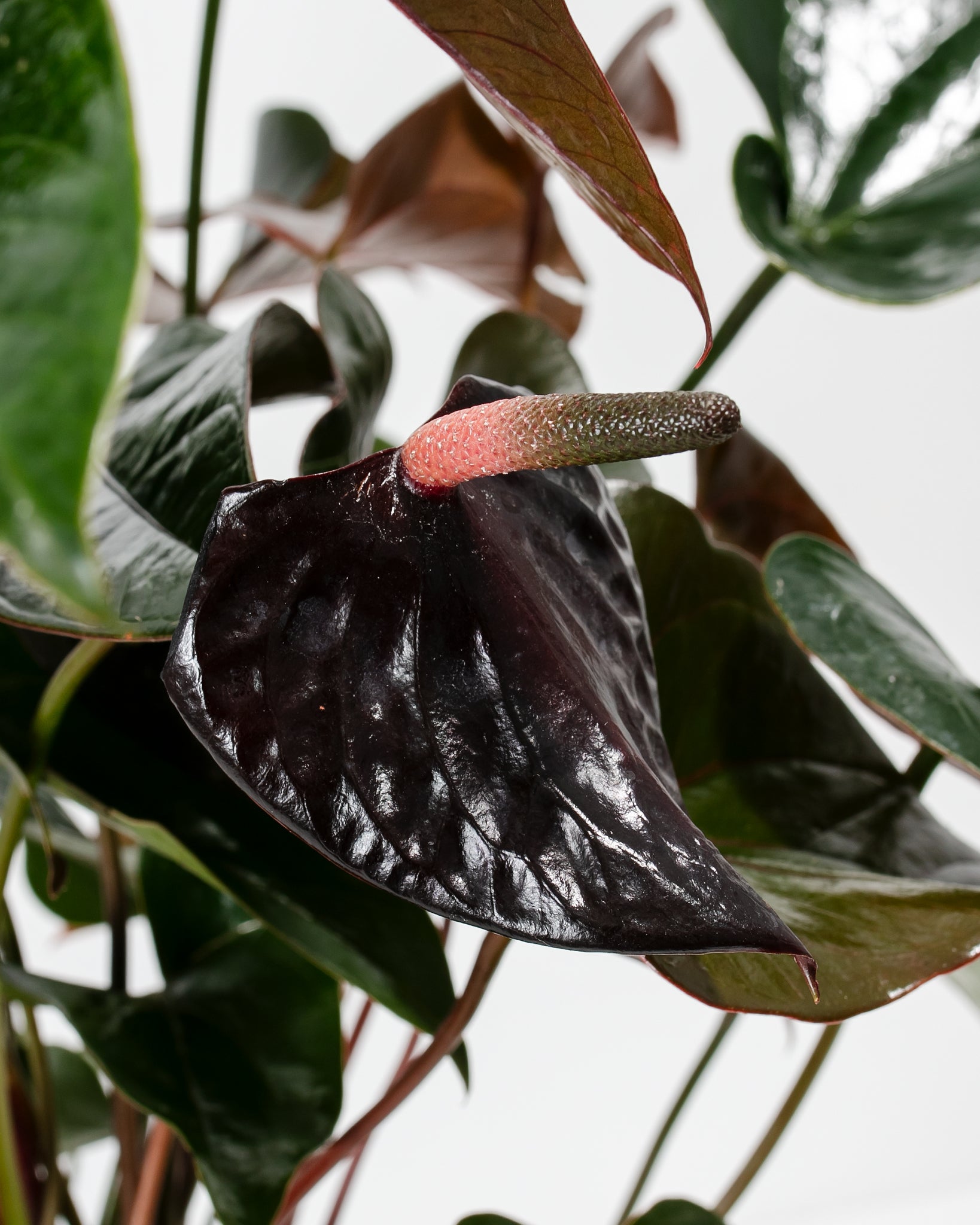
Ideal Lighting Conditions for Your Black Anthurium Plant Care Guide: Tips for Rare Indoor Houseplant
Your Black Anthurium Plant Care Guide: Tips for Rare Indoor Houseplant begins with mastering light. This species thrives in bright, filtered illumination that mimics the dappled canopy of a rainforest. Position the plant near an east- or north-facing window where morning sun can filter gently through a sheer curtain. Direct midday sun can scorch the velvety, almost charcoal-colored leaves & leave unsightly bleach spots. You can also use grow lights with a 6500K spectrum to supplement natural light if windows offer insufficient brilliance. Track light intensity with a simple light meter app or a handheld device to ensure you deliver around 1000–1500 foot-candles. Rotate the pot weekly to encourage even growth & prevent the plant from leaning toward a single source. Avoid placing the anthurium in dark corners or behind thick drapes, since underexposure leads to leggy stems & muted leaf color. With consistent, moderate brightness, new foliage emerges impressively black against vibrant foliage in your indoor collection.
Key Lighting Tips
- Set the plant 3–6 feet from bright windows
- Use sheer curtains to diffuse harsh sunlight
- Rotate the pot every seven days
- Supplement with full-spectrum grow lights if needed
- Aim for 1000–1500 foot-candles of light
Temperature & Humidity Requirements
Maintaining warmth & moisture mirrors this plant’s rainforest origins. Keep temperatures between 65°F & 80°F, avoiding sudden dips below 60°F. Colder drafts from air conditioners or open windows can shock sensitive roots. High humidity of 60–80% encourages large, glossy leaves & deep veining. You can boost moisture by setting the pot atop a pebble tray filled with water or by running a humidifier nearby. Grouping the anthurium with other humidity-loving species, such as ferns & mosses, creates a microclimate that benefits all members. Monitor daily with a hygrometer to prevent conditions from dropping under the critical 50% threshold. Adequate airflow remains essential place the plant in a spot where gentle air circulation keeps foliage dry & mildew-free, but avoid direct drafts.
| Parameter | Ideal Range |
|---|---|
| Daytime Temperature | 65°F–80°F (18°C–27°C) |
| Nighttime Temperature | 60°F–65°F (16°C–18°C) |
| Relative Humidity | 60%–80% |
| Airflow | Moderate, indirect |
Suitable Soil & Potting Mix
Creating a soil blend that allows air to circulate around roots prevents rot & supports vigorous growth. Start with a well-draining base such as high-quality potting soil, then fold in coarse orchid bark to mimic a light, chunky rainforest floor. Add perlite for additional drainage & coco coir for moisture retention without compaction. You can also work in a small amount of charcoal to filter toxins & keep the medium fresh. Ensure the mix holds moisture for about three to five days between waterings but still feels barely damp. Overly dense dirt leads to oxygen deprivation & fungal issues, while a mix that dries out too quickly forces frequent watering cycles. Check that approximately 50% of your blend consists of chunky, airy components & the remaining half feels softly crumbly.
Soil Amendments
- High-grade bark chips
- Perlite or pumice
- Coco coir or peat moss
- Activated charcoal
- Slow-release organic compost
Watering Guidelines
Proper hydration supports leaf turgor & vibrant pigment. Water your Black Anthurium Plant Care Guide: Tips for Rare Indoor Houseplant thoroughly when the top 1–2 inches of soil feel dry to the touch. Use room-temperature, chlorine-free water & pour evenly until it drains freely from the bottom holes. Discard any standing water in the saucer after 15 minutes to avoid soggy roots. In warmer months, you may water once every five to seven days; slow down to every ten to fourteen days when growth slows in cooler seasons. Keep an eye on leaf stiffness drooping leaves often signal underwatering, while yellowing foliage with limp texture indicates overwatering. Adjust accordingly & always test moisture with your finger or a moisture meter.
| Frequency | Notes |
|---|---|
| Spring & Summer | Every 5–7 days |
| Fall & Winter | Every 10–14 days |
| After Repotting | Reduce frequency for 2 weeks |
| Humidity Note | Increase misting if air is dry |
Fertilization Schedule
Balanced feeding nurtures rich leaf color & ongoing development. Apply a water-soluble, balanced 20-20-20 fertilizer at half strength every four weeks during active growth from spring through early autumn. Avoid high-nitrogen formulas that encourage rapid stem elongation at the expense of strong leaf structure. In winter, hold back almost completely to let the plant rest, resuming feeding only when you spot fresh shoots. Always moisten the potting medium before adding fertilizer to prevent root burn. Flush the soil with plain water once per quarter to clear any mineral buildup. Proper feeding frequency remains key underfed anthuriums produce small leaves, while overfeeding leads to salt crusts around the pot rim.
Fertilizer Options
- Water-soluble balanced mix (20-20-20)
- Organic fish emulsion (diluted)
- Slow-release pellets (apply sparingly)
- Seaweed extract (monthly)
- Compost tea (biweekly in growing season)
Potting & Repotting Process
Choosing the right container & timing repotting sessions promotes healthy roots. In spring, when roots fill the current pot, move up by one size no more than two inches in diameter larger than the previous. Gently remove the plant, tease apart any circling roots, & inspect for rot or pests. Replace the bottom layer of soil with fresh mix, position the plant at the same soil line, & backfill around the sides. Water lightly to settle new media, then resume normal watering after a week. Select a pot with multiple drainage holes & ensure it has a stable base. Avoid containers with trays glued in place, since they can hold water & create soggy conditions.
| Step | Description |
|---|---|
| Time of Year | Early spring before active growth |
| Pot Selection | One size larger, proper drainage |
| Soil Preparation | Fresh airy mix |
| Root Inspection | Trim damaged roots |
| Post-Potting Care | Light watering, resume feeding in 2 weeks |
Pruning & Cleaning Practices
Occasional pruning keeps your plant looking its best & prevents disease. Use clean, sharp scissors or pruning shears to cut away any yellowing or brown leaf tips at the base. Remove spent flower stalks when they turn brown, as dead blooms attract fungal spores. Sterilize your tools with rubbing alcohol before & after each cut to block pathogen transfer. Wipe leaves gently with a damp cloth to remove dust & improve photosynthesis. Focus on older inner leaves first newer foliage naturally unfurls at the crown. Regular grooming encourages airflow between leaves & reduces the risk of pests hiding underneath.
Pruning Steps
- Disinfect scissors before use
- Trim brown or yellow leaves
- Cut spent inflorescences at base
- Wipe foliage with soft damp cloth
- Inspect for pests after pruning
Pest & Disease Management
Vigilance prevents most issues before they escalate. Inspect your Black Anthurium Plant Care Guide: Tips for Rare Indoor Houseplant weekly for signs of spider mites, mealybugs, scale, & fungal spots. Catching infestations early lets you treat gently with neem oil or insecticidal soap without damaging sensitive leaves. Ensure good airflow & avoid water sitting on leaves after misting, as prolonged dampness invites fungal pathogens. Keep quarantine protocols if you bring new plants home to avoid cross-contamination. Promptly isolate any infected specimen until you clear all pests. Healthy cultural practices serve as your first line of defense.
“A well-monitored Black Anthurium seldom falls prey to pests if kept in balanced humidity.” – Mrs. Queenie Larson
| Pest/Disease | Treatment |
|---|---|
| Spider Mites | Spray with neem oil weekly |
| Mealybugs | Wipe with alcohol-dipped cotton swabs |
| Scale | Apply insecticidal soap |
| Leaf Spot | Remove affected leaves, use fungicide |
Propagation Techniques
Sharing this rare species adds excitement to any collection. You can propagate Black Anthurium Plant Care Guide: Tips for Rare Indoor Houseplant via division or stem cuttings. In division, gently separate rhizomes at repotting time, making sure each division has at least two healthy leaves & a robust root cluster. For stem cuttings, snip a segment just below a node, dip the cut end in rooting hormone, & plant it in a moist, coarse medium under bright, indirect light. Maintain high humidity using a clear plastic dome or a sealable bag with ventilation holes. Roots typically form within three to four weeks. Once you see new leaves, transfer cuttings into individual pots with standard potting mix & treat them as mature plants.
Propagation Methods
- Rhizome division at repot
- Stem cuttings in moist medium
- Use rooting hormone for faster results
- Maintain 70%–80% humidity
- Transplant after new leaf emergence
Displaying & Styling Your Anthurium
Show off your plant as a centerpiece or accent. Choose decorative pots that offer contrast glossy white ceramic highlights deep black foliage brilliantly. Hang a mature specimen in a macramé hanger to allow leaves to drape naturally. Use stands or shelves at eye level so you gaze directly into each leaf’s intricate venation. Incorporate soft spotlighting at dusk to accentuate leaf texture. Pair with lighter-leafed houseplants to create a layered display & prevent your anthurium from getting lost against dark walls. Move periodically to fresh settings so the plant remains a conversation piece throughout your home.
| Display Type | Considerations |
|---|---|
| Mesa stand | Elevates foliage eye level |
| Hanging basket | Allows natural drape |
| Group tray | Boosts ambient humidity |
| Accent pot | Enhances room décor |
Seasonal Care Variations
Your routine shifts as seasons change. In summer, increase misting twice weekly & monitor soil moisture more frequently as temperatures rise. In cooler months, reduce watering & skip feeding entirely. Move the plant away from drafty doors or windows in fall to avoid sudden cold exposure. During the dry winter months, run a humidifier & cluster plants close together to maintain a shared microclimate. Keep lighting hours at a minimum of 10–12 per day; consider supplemental LED if natural daylight drops below this level.
Seasonal Adjustments
- Summer: more misting, check soil often
- Fall: reduce water, protect from drafts
- Winter: increase humidity, hold off fertilizer
- Spring: resume feeding, consider repotting
- Light: maintain 10–12 hours daily
Common Troubleshooting Tips
Address issues quickly to keep your anthurium thriving. Brown leaf edges typically signal low humidity or overfertilization trim the brown tips & adjust your routine. Yellow leaves near the base often occur with aging foliage; remove them to redirect energy to new growth. Soft, mushy stems point to root rot from overwatering unpot the plant, trim rotten roots, swap soil, & dial back watering. Pale leaves indicate insufficient light; move your anthurium closer to a bright window while protecting it from direct sun scorch.
| Problem | Solution |
|---|---|
| Brown Leaf Tips | Boost humidity, reduce fertilizer |
| Yellowing Lower Leaves | Prune old foliage |
| Root Rot | Repot, trim roots, adjust watering |
| Pale Leaves | Increase bright indirect light |
Companion Plants for a Thriving Display
Pairing your anthurium with complementary species creates a dynamic indoor landscape. Choose ferns like Nephrolepis exaltata to add feathery texture around the base. Calathea varieties bring bold leaf patterns that contrast with the anthurium’s dark tone. Place small orchids nearby to introduce delicate blooms that tie into the anthurium’s dramatic flowers. Moss mats around the pot retain humidity & add an authentic rainforest feel. Grouping plants with similar care requirements simplifies your routine & builds a lush environment.
Recommended Pairings
- Boston fern for soft fronds
- Calathea orbifolia for broad stripes
- Phalaenopsis orchid for subtle blooms
- Peperomia varieties for compact growth
- Live sphagnum moss for humidity
Specialized Growing Accessories
Investing in the right tools simplifies upkeep. A hygrometer with a built-in thermometer helps you track microclimate conditions accurately. Drip trays with pebbles elevate the pot & prevent roots from sitting in water. Adjustable LED grow lamps ensure consistent illumination in darker corners. Use moisture meters to avoid guesswork when watering, & slip-resistant plant stands stabilize taller pots. A sturdy mist sprayer with fine output ensures even leaf coverage & reduces dripping.
| Accessory | Benefit |
|---|---|
| Hygrometer/Thermometer | Monitors humidity & temperature |
| Pebble Tray | Boosts ambient moisture |
| LED Grow Lamp | Offers reliable light source |
| Moisture Meter | Prevents over/underwatering |
| Misting Sprayer | Even leaf misting |
Long-term Maintenance Strategies
Keeping this rare houseplant looking its best requires a sustainable care plan. Track growth cycles in a calendar, noting changes in watering, feeding, & humidity. Conduct quarterly soil flushes to rinse out mineral buildup. Schedule pot inspections every six months to check root health & repot if the plant becomes root-bound. Maintain a light schedule of 10–12 hours daily & adjust lamps seasonally. Keep records of pest treatments & prune at consistent intervals. Over time, this documented routine empowers you to anticipate needs & respond proactively.
Maintenance Checkpoints
- Weekly: check for pests, rotate pot
- Monthly: calibrate fertilizer, flush soil
- Quarterly: inspect roots, repot if needed
- Seasonally: adjust light & humidity
- Annually: review overall plant health
My Personal Encounter with the Black Anthurium Plant Care Guide: Tips for Rare Indoor Houseplant
I first discovered this extraordinary plant in a small greenhouse, & since then I have watched it morph from a delicate seedling into a sprawling centerpiece on my living room shelf. I remember adjusting humidity levels by placing a tray of pebbles & water beneath the pot & monitoring every new leaf as though it were a treasured painting. Over months, I experimented with various soil mixes until I hit the perfect blend of orchid bark & coco coir. I treated each pest sighting as a puzzle to solve, & every successful repot filled me with pride. This personal journey taught me that attentiveness & a willingness to adapt remains the cornerstone of caring for such a rare indoor treasure.
Conclusion
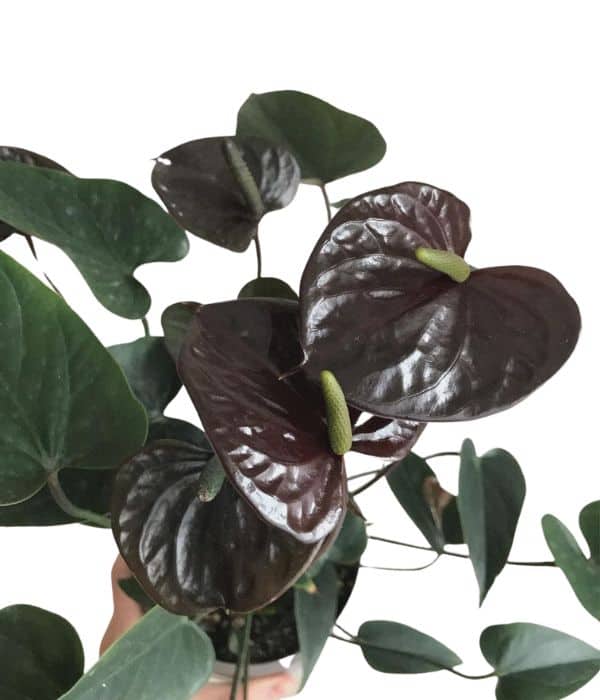
Growing a Black Anthurium is a rewarding way to add a rare leaf color to your plant corner. You just need bright, indirect light & a spot away from hot sun. A light potting mix with good drainage & quick watering when the top soil feels dry will keep roots happy. Feed with a gentle, balanced fertilizer every month during warm seasons. Watch for pests & treat any issues early. Pruning older leaves helps shape new growth. Keep humidity up by daily misting or using a tray of stones with water. Enjoy watching your dark leaves shine in your home.
